
Choosing the best Electric Golf Cart starts with real use, not glossy specifications. Will it carry two people across paved paths, climb wet grass, or transport tools over uneven ground? The National Golf Foundation reported more than 500 million golf rounds in the United States during 2023. That activity shows why comfort, reliability, and charging access matter beyond the showroom.
Battery technology also deserves careful attention. The International Energy Agency reported over 14 million electric cars sold worldwide in 2023, reflecting rapid progress in battery manufacturing and energy storage. Electric golf carts benefit from this development, but they are not small cars. Their range changes with terrain, passenger weight, tire pressure, temperature, and driving habits. A manufacturer’s maximum range may feel optimistic.
Golf-cart industry consultant Mike R. Lawrence says, “The best cart is the one that fits the owner’s daily route, not the one with the longest specification sheet.” That principle is easy to overlook. Buyers should compare lithium-ion and lead-acid batteries, charging time, motor power, ground clearance, braking systems, warranty coverage, and local service support. A quiet motor is useful. A reliable charger is better.
There is no perfect choice.
This guide examines those trade-offs with practical examples, including a two-seat cart on a flat community path and a four-seat model facing hills and repeated stops. Some recommendations may remain imperfect because every property, climate, and budget differs. That uncertainty matters. The right Electric Golf Cart should match verified needs, not imagined ones.
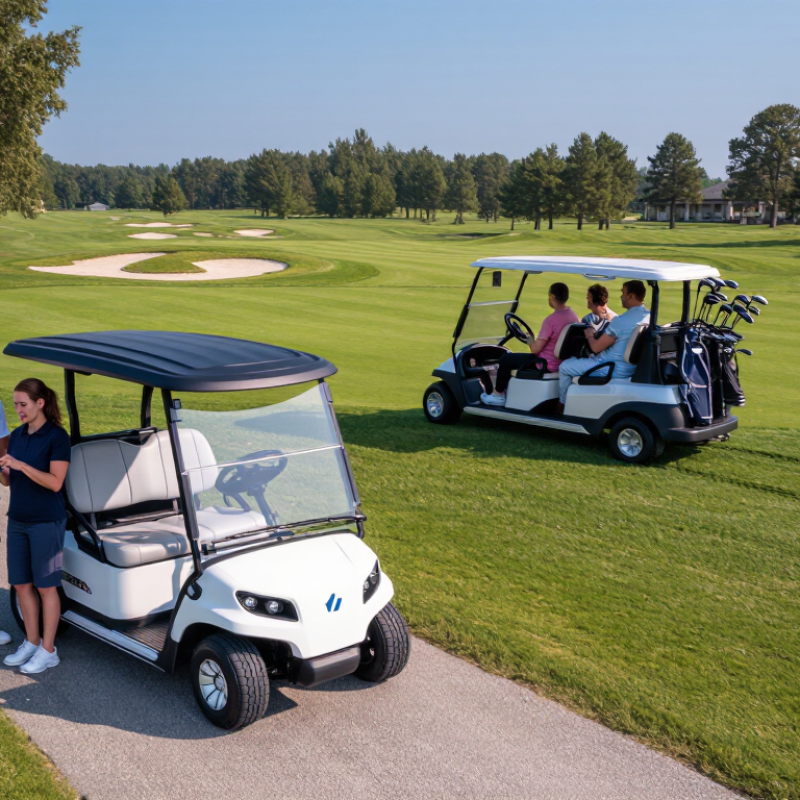
Before comparing electric golf carts, picture a normal day of use. Will you mainly travel between holes, carry tools around a large property, or take passengers on short neighborhood trips? These needs lead to different priorities. A golfer may value a compact cart and a secure place for clubs. A groundskeeper may need a cargo bed and enough capacity for equipment. Passenger use calls for comfortable seating and easy entry. Be specific.
Next, consider the route, not just the distance. A flat path places different demands on a cart than steep, uneven ground. Note the longest trip you expect, how often you can recharge, and whether the cart will carry passengers or heavy loads. Hills, cold weather, tire condition, and battery age can reduce practical range. Published estimates are useful, but they may not match your routine. That matters.
Measure tight gates, garage openings, and storage spaces before shopping. Check the cart’s turning space and charging access, too. During a test drive, try a slope and a tight turn if possible. Listen for unusual noise, and notice whether the seats feel supportive after several minutes. I once underestimated how often small bumps would matter; a smooth showroom floor can hide that. Write down your real requirements, then compare carts against them rather than choosing by appearance alone.
Compare Battery Types, Range, Charging, and Maintenance
Battery choice affects cost, weight, and daily upkeep. Lead-acid batteries usually cost less upfront, but they need regular inspection and proper watering when applicable. Lithium batteries are lighter and often charge faster, though their initial price can be higher. Check the cart’s manual before choosing a replacement; battery voltage and charger compatibility matter. A mismatch can cause problems.
Range figures are estimates, not guarantees. Passengers, hills, soft turf, tire pressure, and cold weather can all reduce distance. Think about your usual route and leave a practical buffer rather than relying on the maximum advertised range. Charging time also varies by battery capacity and charger output. Charge in a dry, ventilated area, and follow the manufacturer’s instructions. Small details count.
Choosing an electric golf cart begins with the route, not just the motor rating. A cart used on flat paths may need less climbing power than one facing long, steep grades. Check the stated passenger and cargo limits alongside the motor specifications. Then test the cart with a realistic load. Does it start smoothly on a slope? Does it slow predictably downhill? Numbers alone can mislead. Test it loaded.
Seating should match how people will actually ride. Count passengers, golf bags, and any coolers or tools carried on regular trips. A four-seat layout may sound ideal, but legroom can shrink when rear-facing seats are occupied. Sit in every position before deciding. Check how easily passengers enter and exit, especially on uneven ground. Small details matter.
Terrain affects more than motor choice. Grass, gravel, wet paths, and sharp turns place different demands on tires, ground clearance, and braking. Ask how the cart handles the steepest route you expect to use, and review its guidance for slopes and load limits. A short test on smooth pavement will not reveal every weakness. It is easy to overbuy power, too; balance performance against passenger needs, storage, and expected range. If your route changes seasonally, leave some room in your decision for that uncertainty.
Evaluate motor power, seating capacity, payload, and terrain performance before selecting an electric golf cart.
Representative specifications show how larger seating and payload requirements generally call for higher motor power. Flat paved paths can use lower-power configurations, while hilly or uneven terrain benefits from higher power and stronger gradeability. Actual performance varies with battery voltage, vehicle weight, tire size, load, and operating conditions.
When choosing the best electric golf cart, begin with safety rather than appearance. During a test drive, check whether the brakes respond smoothly on a gentle slope. Seat belts, bright lights, turn signals, mirrors, and a clear horn improve control around people and vehicles. A reliable parking brake matters too. Look for battery protection, secure wiring, and tires with even tread. Ask for maintenance records and read the owner’s manual carefully. Small omissions can become expensive problems.
Comfort affects every trip, even short ones. Sit in each seat and check legroom, back support, and steering position. A cushioned seat helps on uneven paths, while basic suspension reduces harsh movement. A roof, windshield, and weather protection can make changing conditions less unpleasant. Quiet operation is useful. Still, I once underestimated seat height and found entry awkward after repeated stops. Try getting in and out several times, not just once.
Measure the cart before buying it. Confirm its length, width, turning radius, and height against your garage, trailer, storage area, and regular routes. Leave clearance for doors and charging access. Storage should match your routine. Under-seat compartments protect small items, while a rear basket carries groceries or tools. Check the rated payload, because overloaded baskets can affect braking and handling. Test whether storage lids open fully when seats are occupied. A practical layout may look less attractive, but it usually serves better.
| How to Choose the Best Electric Golf Cart? - Check Safety Features, Comfort, Dimensions, and Storage Options | ||||||
|---|---|---|---|---|---|---|
| Cart Configuration | Typical Seating | Approximate Dimensions (L × W) | Safety Features to Check | Comfort Considerations | Storage Options | Best Suited For |
| Compact two-seat cart | 2 passengers | About 92–96 × 47–48 in (234–244 × 119–122 cm) | Check that headlights, brake lights, turn signals, horn, mirrors, parking brake, and seat belts are present where required for your intended use. | Look for supportive seats, sufficient legroom, and a smooth ride over the surfaces you use most. | Common options include a small dashboard compartment, cup holders, and a lockable or covered under-seat area. | Couples, small properties, and buyers who prioritize a shorter overall length. |
| Four-seat cart with rear-facing seats | Typically 4 passengers | About 108–120 × 47–48 in (274–305 × 119–122 cm) | Check that each passenger has a suitable seating position and restraint system; confirm required lighting and mirrors for local regulations. | Rear-facing passengers may have less legroom. Test access, foot space, and ride comfort in every seat. | May offer under-seat storage and a rear-facing seat that converts into a small cargo platform on some configurations. | Families or groups who need occasional extra seating without a long, forward-facing layout. |
| Four-seat forward-facing cart | 4 passengers | About 110–120 × 47–48 in (279–305 × 119–122 cm) | Inspect seat belts, mirrors, lighting, horn, tires, brakes, and the parking brake. Features and road-use approval vary by model and location. | Four forward-facing seats can make entry and conversation easier; check seat spacing and cushioning before buying. | Look for a rear cargo area, under-seat compartments, and a stated payload capacity suitable for passengers and belongings. | Regular passenger transport where a longer cart can be accommodated. |
| Six-seat cart | Typically 6 passengers | About 132–144 × 47–48 in (335–366 × 119–122 cm) | Verify the cart’s rated passenger and payload capacities, braking performance, restraints, visibility, and required road-use equipment. | Check passenger access, legroom in every row, and how the longer wheelbase handles on your routes. | Passenger seating can reduce cargo space; check for a dedicated rear cargo area or compatible cargo accessories. | Larger groups, resorts, or properties with wide paths and enough parking space. |
| Utility-oriented cart | Usually 2 passengers; configuration varies | Often similar to a compact or four-seat model; measure the specific cart and cargo attachment | Check the rated load, braking system, tire condition, and secure mounting of any cargo box or utility bed. | Consider seat comfort, visibility around the load, and ease of getting in and out while working. | May include a rear utility bed, cargo box, or racks. Confirm the load limit and whether accessories affect capacity. | Maintenance tasks, light hauling, and property work within the cart’s rated capacity. |
| Buying note: Dimensions and equipment are representative ranges, not universal specifications. Actual measurements, seating layouts, storage, safety equipment, and legal requirements vary by model and region. Measure doorways, paths, trailer space, and parking areas, and verify the manufacturer’s specifications before purchasing. | ||||||
Choosing an electric golf cart starts with total cost, not the showroom price. Include electricity, charger installation, tires, insurance, storage, financing, and eventual battery replacement. Argonne National Laboratory’s AFLEET tool models lower maintenance costs for electric vehicles because they use fewer moving parts. However, golf-cart duty cycles differ from road vehicles. Treat that comparison as guidance, not certainty.
Look beyond sticker price. A strong warranty should state battery coverage, years, usage limits, labor costs, and replacement terms. Some policies reduce coverage as the battery ages. Ask whether parts and service remain available after the warranty ends. The U.S. Department of Energy’s Alternative Fuels Data Center confirms that electric vehicles generally need less routine maintenance, but battery condition still determines long-term value. Request written testing standards, not vague claims about range or durability.
Service access matters. The International Energy Agency’s Global EV Outlook 2024 reports that electric vehicle sales reached nearly 14 million worldwide in 2023, expanding the need for trained technicians and dependable parts networks. Local demand does not guarantee local support. Check repair response times, stocked components, software support, and technician certifications. Speak with current owners if possible. Promises are not proof. I would also inspect charging behavior, corrosion, brake wear, and battery records during a test drive. A lower-priced cart may become expensive when one unavailable part stops it for weeks.
Match power to your steepest regular route and expected load. Test it with passengers and cargo aboard. Numbers alone can mislead.
Sit in every seat, including rear-facing ones. Check legroom, steering position, and how easily passengers get in and out. Try it more than once.
See whether it starts smoothly uphill and slows predictably downhill. Also check the slope guidance, load limits, tires, ground clearance, and braking.
Test the brakes and parking brake. Look for seat belts, bright lights, turn signals, mirrors, and a clear horn. Inspect tires and secure wiring, too.
Measure its length, width, and height. Leave room for doors, charging access, and turning. A tape measure beats a guess.
Match storage to regular trips. Under-seat compartments can hold small items, while a rear basket may carry groceries or tools. Check its payload rating and lid clearance.
Consider charging, installation, tires, insurance, storage, financing, and future battery replacement. Lower routine maintenance is possible, but it does not settle every cost.
Get battery coverage, time limits, usage rules, labor costs, and replacement terms in writing. Check local repair times, parts availability, and technician experience. Promises are not proof.
Choosing the best Electric Golf Cart starts with understanding how and where it will be used. Consider typical trip distances, number of passengers, cargo needs, and whether the cart will travel on smooth paths, hills, or uneven ground. Compare battery types by range, charging time, expected lifespan, and maintenance requirements, then match motor power and seating capacity to your routes and regular load. A cart suited to gentle, short trips may not perform as well on steep terrain or during longer outings.
Before deciding, check practical details such as braking and lighting features, seating comfort, overall dimensions, and available storage. Make sure the cart can be parked and transported where needed. Compare the total cost of ownership, including charging, upkeep, and possible replacement parts, rather than focusing only on the purchase price. Review warranty coverage, reliability information, and the availability of dependable dealer support. A thoughtful comparison of these factors can help you choose a cart that fits your needs now and remains useful over time.
